Photography
What Is Blue Hour? Timing, Light and Photography
By SunCast team · Published · Last updated · 5 min read · Markdown
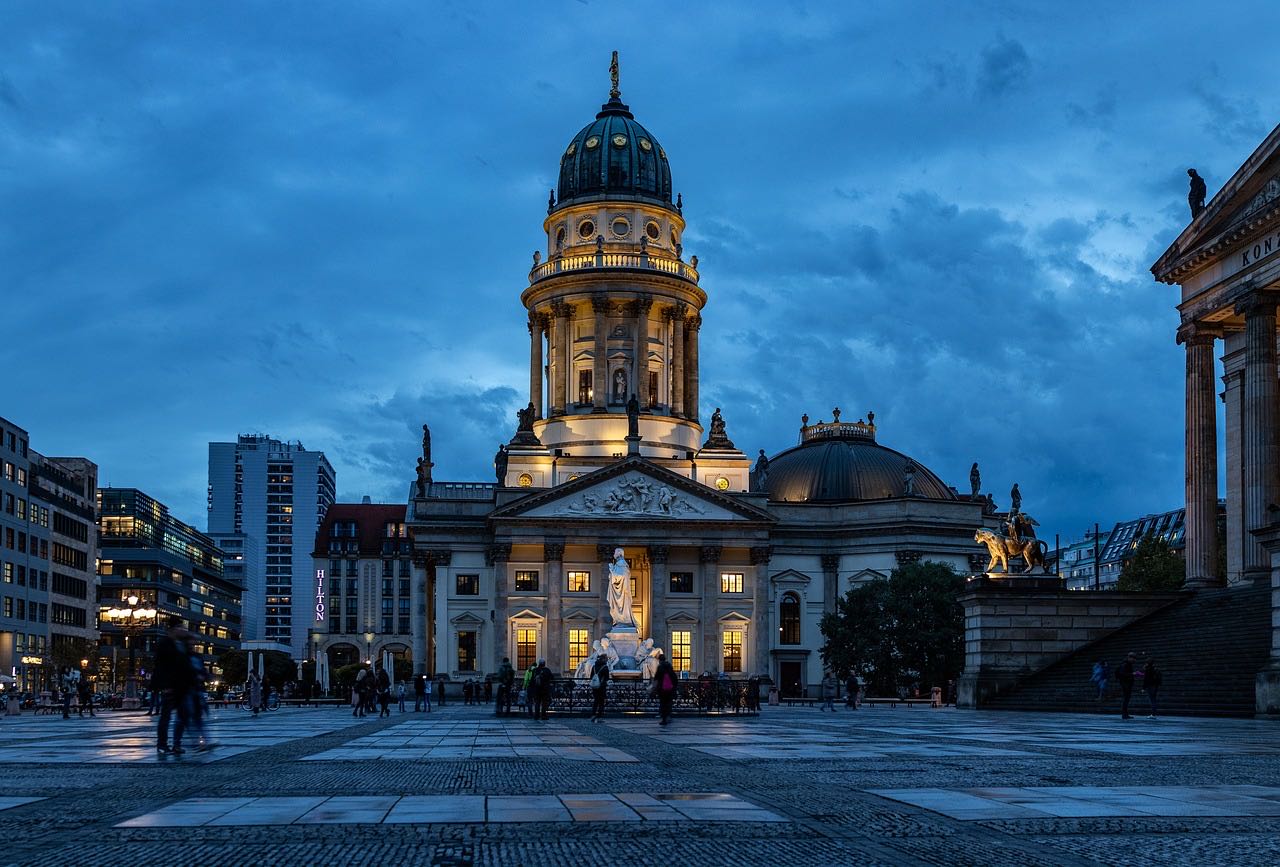
What is blue hour? It’s the stretch of twilight, just before sunrise and just after sunset, when the sun sits well below the horizon and the sky turns a deep, saturated blue. The sun is out of view, but its light still scatters through the upper atmosphere. With the longer red wavelengths below the horizon, the remaining light is overwhelmingly blue. It is softer and cooler than golden hour.
Key takeaways
- Blue hour is the twilight period when the sun is roughly 4° to 8° below the horizon, after golden hour in the evening and before it in the morning.
- The light is cool, even, and low-contrast. Its deep-blue sky can contrast well with artificial light.
- It is rarely an hour. The evening window lasts about 17 minutes in Singapore all year, 28 to 57 minutes in Copenhagen depending on the season, and in Reykjavík it does not happen at all around the June solstice.
- To see blue hour times for any location and date, check the blue hour section of the sun times calculator.
What blue hour actually is
Blue hour is a stage of twilight. Once the sun drops below the horizon, sunlight keeps illuminating the sky from below for a while and grows dimmer in stages. Blue hour is the part of that fade when the warm tones are gone but enough light remains to colour the sky a rich blue rather than black.
The colour comes from the same physics that makes the daytime sky blue, taken to an extreme. Sunlight passing through that much atmosphere has its longer red and orange wavelengths scattered away and absorbed, while the shorter blue wavelengths survive the journey. There’s a contribution from ozone in the upper atmosphere too, which absorbs remaining red light and deepens the blue. The result is a sky that glows an even, twilight blue from horizon to horizon.
Astronomically, blue hour straddles the boundary between civil and nautical twilight. SunCast’s calculators use the sun’s centre between 4° and 8° below the horizon. The few minutes between sunset and −4° belong to neither window: golden hour in the calculator ends at sunset, and the sky is still holding warm colour near the horizon. Below −8°, the blue drains toward night.
Blue hour vs. golden hour
The two are neighbours in time and are often confused. They happen back to back: in the evening, golden hour comes first while the sun is low above the horizon, then blue hour follows once it has sunk 4° below. In the morning the order reverses, with blue hour first and golden hour following as the sun climbs toward sunrise.
The difference in the light is what matters:
- Golden hour is warm and directional. The sun is still visible (or nearly so), casting long shadows and side-light that models texture and shape. Think glowing skin tones, rim-lit subjects, and long warm shadows.
- Blue hour is cool and diffuse. The sun is gone, so there are no direct shadows, only soft, even light from the whole sky. Contrast is low, colours are muted, and the deep-blue sky can set off warm artificial light.
Cityscape and architecture photographers often use blue hour because street lamps, windows, and signage read as warm gold against a sky that is still blue rather than black. Golden hour suits faces and landscapes; blue hour suits skylines and lit interiors. The same outing can include both if you stay through the transition.
When blue hour happens and how long it lasts
Blue hour occurs twice a day: shortly after sunset in the evening and shortly before sunrise in the morning.
Latitude has the largest effect on its length. Near the equator, the sun drops steeply below the horizon and passes through the twilight angles quickly. At higher latitudes, it sets at a shallow angle and lingers. The evening window for four cities in 2026, calculated with SunCast’s sun times calculator, shows how far apart they are (local times):
| City | 20 March | 21 June | 21 December |
|---|---|---|---|
| Reykjavík | 20:12–20:49 (37 min) | None | 16:23–17:14 (51 min) |
| Copenhagen | 18:46–19:14 (28 min) | 22:34–23:31 (57 min) | 16:09–16:43 (34 min) |
| Madrid | 19:44–20:05 (21 min) | 22:10–22:36 (26 min) | 18:12–18:35 (23 min) |
| Singapore | 19:30–19:46 (16 min) | 19:27–19:45 (18 min) | 19:19–19:36 (17 min) |
On the June solstice in Reykjavík the sun sets at 00:05 and only reaches 2.4° below the horizon before rising again at 02:56, so the sky never gets deep enough for blue hour; the whole short night is bright twilight. Copenhagen’s June blue hour, by contrast, is long but late, starting after 22:30. A December trip to the same city moves it to just after 16:00.
These figures assume a flat horizon at sea level. Hills and buildings change what you see from a particular spot even when the astronomical timing is the same.
To get the times for your own location, use the SunCast sun times calculator, which lists both blue-hour windows alongside golden hour and every twilight phase. NOAA’s solar calculator gives the underlying sunrise, sunset, and twilight angles for any latitude and longitude.
Find blue hour at your location
Choose a place and date to see both blue-hour windows in local time.
Choose a search result to start. Browser location is only requested when you press the button above.
Open the sun times calculator →How to shoot blue hour
At Madrid’s latitude you have about 20 to 25 minutes, and the light changes minute to minute:
- Arrive during golden hour and stay. Shoot the sunset golden hour first, then continue as the warm light fades to blue. You get two distinct looks from one location. (For the golden-hour half of that plan, see what time golden hour is today and the golden hour calculator.)
- Bring a tripod. Light levels fall fast, so exposures lengthen into the seconds. A tripod keeps long exposures sharp and lets you drop to a clean, low ISO.
- Look for artificial light. Blue hour is at its best where city lights, lit windows, or signage can play warm against the blue sky. Scout a composition that includes them.
- Work quickly and bracket. The blue deepens and darkens throughout the window, so the “right” exposure is a moving target. Shoot more than you think you need.
For planning a shoot around the light, including scouting and reading the sun’s direction, see how photographers use SunCast for photography.
The short version
Blue hour is the cool, deep-blue twilight just before sunrise and just after sunset, when the sun sits 4° to 8° below the horizon. Its timing and length are set by the sun’s angle, so calculate it for your location and date. For more on the science, Wikipedia’s blue hour and twilight entries are clear primers.